Hydration
The amount of water compared with flour, expressed as a percentage. Higher hydration usually means a softer, more extensible dough.
 HYDRATE
• THE •
CRUST
HYDRATE
• THE •
CRUST
Sourdough is more than a timer and a recipe. Learn the language, visual cues, starter behavior, and hands-on techniques that help you understand what the dough is doing—and what to do next.
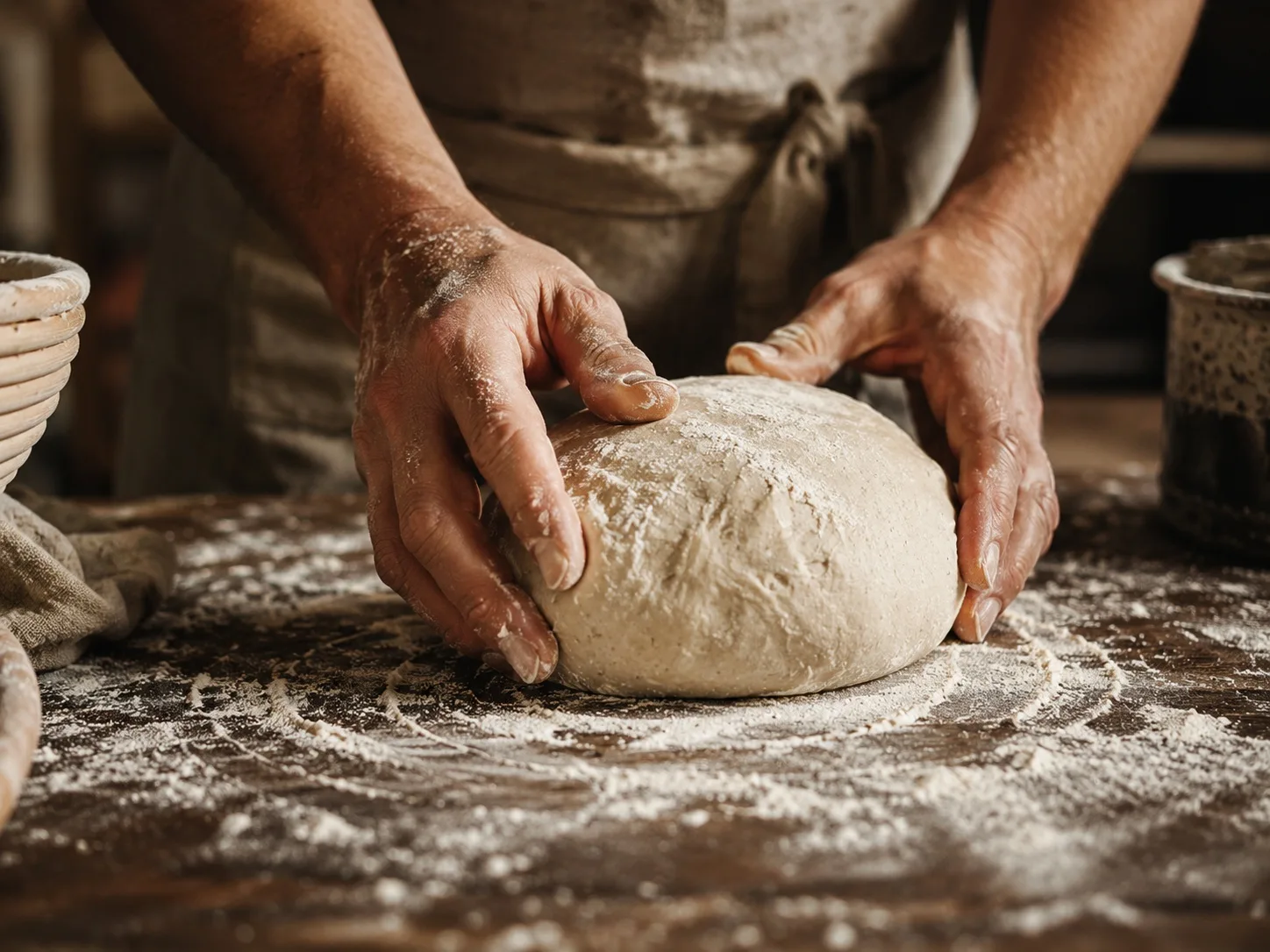
Hydration and baker’s percentages give you a repeatable way to understand and scale sourdough formulas.
FermentationTemperature, starter amount, starter strength, and time work together. The clock tells you when to look—not when the dough is automatically done.
HandlingFolds, rests, shaping, and proofing all influence how well the dough holds gas and expands in the oven.
Short definitions for the words that come up again and again when mixing, fermenting, shaping, proofing, and baking sourdough.
The amount of water compared with flour, expressed as a percentage. Higher hydration usually means a softer, more extensible dough.
A formula system where total flour is always 100% and every other ingredient is measured relative to it.
The main fermentation period after mixing and before shaping. This is where the dough develops gas, flavor, and much of its final structure.
A gentle way to strengthen dough during bulk fermentation by stretching part of the dough and folding it back over itself.
The dough’s ability to hold shape and trap fermentation gases. Strength comes from flour, mixing, folds, and time.
A short rest after pre-shaping that lets the dough relax before final shaping.
Creating the final form while building enough surface tension to support the dough without tearing it.
The rise after shaping and before baking. The goal is enough fermentation for expansion without exhausting the dough.
A gentle press used as one clue to proofing. A slow partial return can suggest readiness, but temperature and dough type still matter.
Proofing shaped dough under refrigeration to slow fermentation, improve scheduling, and often deepen flavor.
Cutting the surface before baking so expanding gases have a controlled place to escape.
The rapid expansion that happens during the first part of baking as trapped gas expands and the dough structure sets.
Starter condition and inoculation shape the pace of sourdough fermentation. These terms help you understand what your culture is doing before it ever reaches the dough.
Open the starter calculator →A recently fed starter that is visibly fermenting—expanded, bubbly, and capable of leavening dough.
The point where a fed starter reaches its highest rise before it begins to flatten or fall. This is a useful reference point for judging activity.
The amount of starter or preferment used relative to the flour. More inoculation generally speeds fermentation; less generally slows it.
A portion of starter built specifically for a bake, often with a chosen flour, hydration, and feeding ratio.
Use time as a guide, then confirm progress with what you can see and feel.
Look for even hydration and no obvious dry flour. Give flour time to absorb water before deciding the dough is too wet or too dry.
Use mixing, stretch-and-folds, or coil folds as needed. The dough should gradually become smoother, more elastic, and better able to hold itself.
Watch for expansion, bubbles, a lighter feel, and a smoother or slightly domed surface. Percentage rise is usually more useful than a fixed number of hours.
Build surface tension without degassing everything. During final proof, look for a dough that has relaxed and expanded but still has enough strength to spring.
Score with intention, then use oven spring, crust color, and internal doneness to judge the bake—not color alone.
Hydration is water weight divided by flour weight. It affects handling, extensibility, crumb, and how much strength the dough needs.
Different flours absorb water differently, so a percentage is a starting point—not a universal texture.
Hydration calculator →Flour is always 100%. Every other ingredient is expressed relative to flour, making formulas easier to scale and compare.
This works across country loaves, focaccia, sourdough pizza, pretzels, and enriched sourdough formulas.
Baker’s percentage calculator →Warm dough generally ferments faster; cool dough generally moves slower. Starter activity, inoculation, flour choice, sugar, fat, and salt also change the pace.
The best habit is to use a schedule to know when to check, then let the dough’s condition decide the next step.
Bulk fermentation planner →Refrigeration slows fermentation rather than stopping it immediately. Dough continues to change while its center cools.
Cold proofing is useful for scheduling, flavor, and handling, but the dough’s fermentation before refrigeration still matters.
Timeline planner →